
DeccanPro · Chennai restaurant guide
https://deccanpro.com/guides/restaurant-kitchen-handoff-checklist/
Updated
Agree on the reference everyone will use
Choose the table or order reference shown in your demonstrated workflow. Ask the captain, cook and person collecting food to read the same example. Avoid relying only on the guest’s appearance or the dish name: two nearby tables can order the same meal within a minute.
Place the paper ticket or display where staff can read it without reaching across preparation work. Check the reference from the collection position as well as the cooking position. If a spoken announcement attracts attention, the ticket or display should still supply the detailed instruction.
Distinguish new work from changes
Rehearse a table adding one more dish after the original KOT. The kitchen should identify the extra work without preparing the original dishes again. Then demonstrate a correction and ask the cook to explain the final preparation requirement. Resolve any difference with the captain before continuing.
Choose a named person to relay urgent clarifications. Several staff shouting different versions across the pass can make the latest instruction unclear. A verbal clarification should be checked against the current order using the supported procedure, rather than becoming an undocumented replacement for it.
Separate preparation, readiness and collection
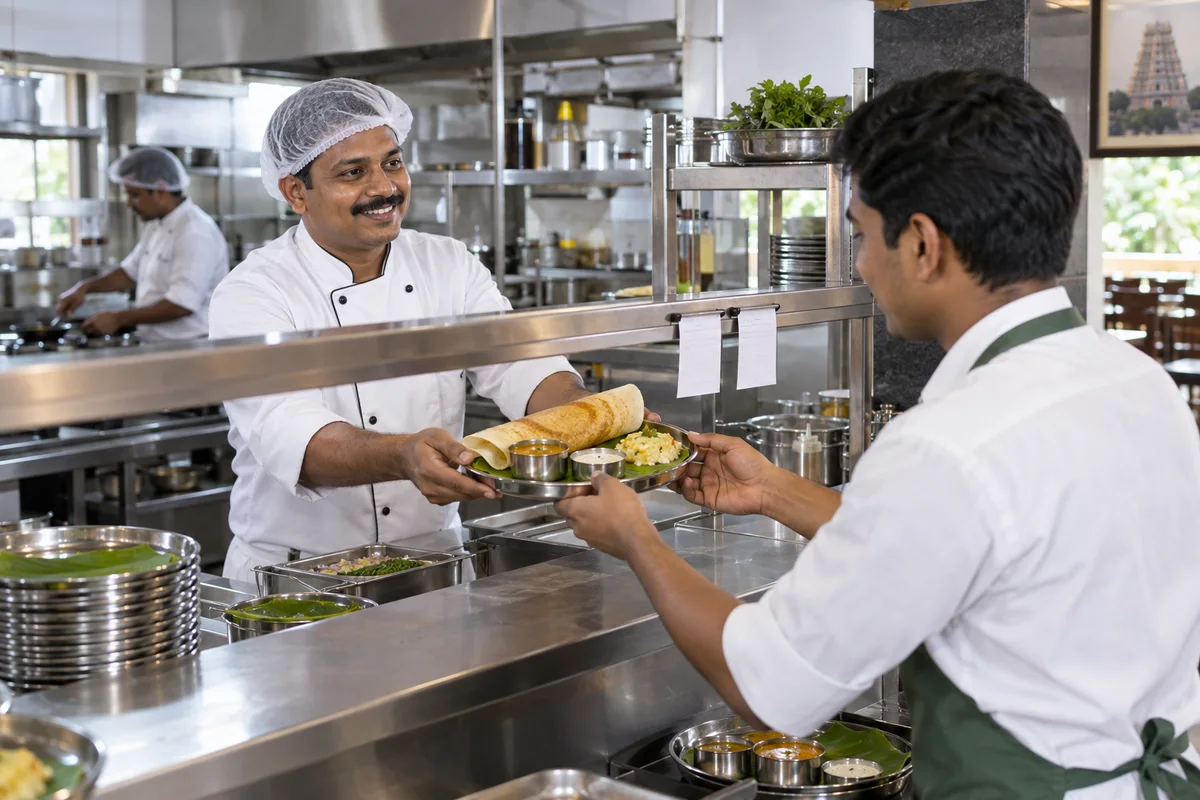
Food being ready and food being collected are different events. Agree how your team identifies a plate awaiting collection, how they match it to its order and who notices when only part of a table’s food is ready. These are staff responsibilities to demonstrate, not assumed software status features.
For a Chennai restaurant serving both dine-in meals and parcel orders, physically separate the two collection routines where practical. Run a sample of each at the same time. DeccanPro’s KOT printing and kitchen display can be reviewed at the pass so the staff procedure fits the actual equipment.
Rehearse a partial order beside a similar complete order
Use training props and fictional references outside service. Table H8 ordered two meals and one coffee. Parcel P9 ordered one meal. Put one meal and the coffee at the table collection point while the second H8 meal is still being prepared. Put the complete P9 parcel at its separate collection point. Ask a server who did not watch the preparation to identify what can be collected and what remains outstanding.
Agree your restaurant’s partial-service policy before the exercise. If staff may serve ready items first, record exactly what left the pass and who is following up the remaining meal. If the table should be served together, keep the reference visible while waiting. These are manual service decisions, not assumed item-level ready or collected buttons in the software.
Scroll sideways if needed to see all columns.
| Training reference | What the observer can see | What the server must establish |
|---|---|---|
| H8: first collection | One of two meals plus the coffee is ready | Whether partial service is agreed; one meal remains outstanding |
| P9: separate parcel | One packed meal is ready for its own reference | It belongs to P9, not the missing H8 meal |
| H8: remaining meal | The second meal arrives later | Who collects it and confirms it reaches H8 without restarting the first items |
Check the handoff after an interruption
Pause the rehearsal after the first H8 collection and ask a different server to take over. Without relying on memory, the incoming person should identify the one meal still pending, the separate parcel and the colleague responsible for follow-up. A ticket at the pass does not show by itself whether some of its food has already left. Use the restaurant’s agreed record and confirm any uncertainty with the kitchen lead.
Use the service rehearsal worksheet below to record the partial order, similar parcel, late item and incoming-server checks separately. Write the actual mistake or prompting in Observed result, assign an action and repeat that checkpoint after coaching. Do not mark the whole order complete merely because the first plate was collected. At the end, compare the kitchen record, what was handed over and the saved order; check payment independently at the counter.
PUT IT INTO PRACTICE
Your checklist
- Shared table or order reference understood
- Extra round does not restart the first round
- One person owns urgent clarification
- Ready food matched before collection
- Partial collection leaves the remaining quantity visible
- Similar parcel is not used to complete a different order
- Incoming server identifies the outstanding item